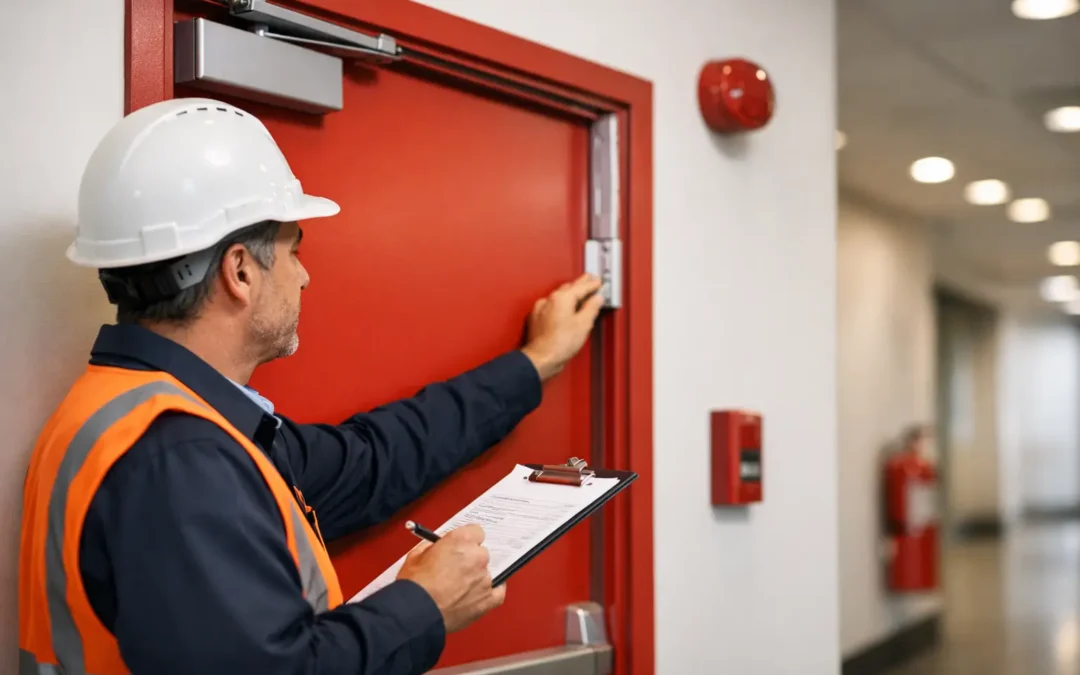
Fire doors serve an essential role in ensuring the safety of buildings and their occupants. They are designed to resist fire and smoke, limiting the spread and giving building occupants more time to evacuate. More than just a barrier, fire doors are an integral part of a building’s overall fire protection system and can save lives if a fire breaks out.
Features such as intumescent seals and cold smoke seals provide additional protection against smoke and fire. Intumescent seals expand in high temperatures, filling the gaps around the door, preventing the spread of fire, while cold smoke seals prevent smoke from seeping through the door’s edges.
The benefits of fire doors are plentiful. They not only protect property from extensive damage but also significantly increase the safety level of buildings. Hence, they are now an essential requirement in building regulations across the United Kingdom, including Liverpool.
Fire Door Installations: A Critical Aspect of Liverpool’s Infrastructure
Liverpool, being a bustling city with a large number of commercial and residential buildings, recognises the importance of fire door installations. These installations are an integral part of the city’s infrastructure, contributing significantly to the safety and security of its people.
Fire door installations in Liverpool are meticulously handled by trained professionals. They ensure that the fire doors are correctly fitted with all necessary components and are fully operational. This meticulous attention to detail not only ensures compliance with safety regulations but also enhances the effectiveness of these safety devices.
The advantages of professional installation include optimal functionality and longevity of the fire doors. A correctly installed fire door will offer maximum protection, promoting the safety of the building and its occupants. Consequently, it is a critical aspect of Liverpool’s infrastructure, contributing to the city’s overall safety and security measures.
How Fire Doors Enhance Safety and Security in Liverpool Buildings
Fire doors significantly enhance the safety and security of buildings in Liverpool. They provide a physical barrier against fire, slowing down its spread and providing additional time for occupants to evacuate the premises safely.
One of the key features of fire doors is their ability to compartmentalise a building. By confining the fire to a specific area, they prevent it from spreading quickly, protecting the rest of the building and its occupants. This feature also protects valuable property and buys time for the fire services to arrive and combat the fire.
Furthermore, fire doors also enhance security by deterring unauthorised entry. Many fire doors are equipped with secure locking systems, making it harder for potential intruders to gain access. Hence, they function as both fire prevention and security devices, making them a crucial addition to Liverpool buildings.
Exploring Regulatory Standards for Fire Door Installations in Liverpool
Fire door installations in Liverpool must comply with specific regulatory standards. These standards, defined by the British Standards Institution (BSI), dictate the design, installation, and maintenance of fire doors.
The key standard is BS 476, which specifies the fire resistance requirements for elements of construction, including fire doors. Another important standard is BS EN 1634, which outlines the test methods for the fire resistance and smoke control characteristics of door and shutter assemblies.
Compliance with these standards ensures that fire doors can effectively resist fire and smoke in the event of a fire. It also guarantees that the doors meet the robustness and durability requirements necessary for continual use. Therefore, adhering to these regulatory standards is of utmost importance in ensuring the effectiveness of fire doors in Liverpool.
The Anatomy of a Fire Door: Components and Their Importance
A fire door is composed of several critical components, each serving its unique purpose in enhancing the door’s fire resistance properties. The door leaf, often comprised of a fire-resistant core, provides the primary barrier against fire. The door frame, constructed from materials like steel or hardwood, secures the door leaf and provides structural support.
Intumescent seals and cold smoke seals are fitted into the door or frame. In a fire, intumescent seals expand to close the gaps around the door, while cold smoke seals prevent the passage of smoke. Door furniture, including hinges, handles, and locks, are also designed to withstand high temperatures.
Each of these components is critical, contributing to the overall functionality of the fire door. A flaw in any component can compromise the door’s fire resistance, highlighting the importance of quality materials, expert installation, and regular maintenance.
Case Studies: Effective Use of Fire Doors in Liverpool’s Structures
Liverpool’s structures provide numerous examples of effective fire door use. In 2018, a fire broke out in a Liverpool city centre block of flats. The building’s fire doors successfully prevented the fire from spreading, allowing all residents to evacuate safely.
In another instance, a fire at a Liverpool school was contained within a single room, thanks to correctly installed and maintained fire doors. These real-life examples underscore the effectiveness of fire doors in providing a life-saving barrier against the spread of fire.
These case studies emphasise the importance of following regulatory standards and ensuring the correct installation and maintenance of fire doors. They validate the need for regular inspections to guarantee that fire doors remain fully functional and effective.
Why Regular Fire Door Inspections and Maintenance are Crucial
Regular fire door inspections and maintenance are pivotal to ensuring their sustained functionality. Over time, fire doors can undergo wear and tear, which may impact their ability to resist fire and smoke effectively.
An inspection involves checking all components of the fire door, including the door leaf, frame, seals, and furniture. Any defects, such as damaged seals or misaligned doors, are identified and rectified. Regular maintenance ensures that the fire door remains in optimal condition, ready to perform in the event of a fire.
The importance of regular inspections and maintenance cannot be understated. It not only ensures compliance with safety regulations but also guarantees the continued protection of buildings and their occupants, reinforcing the importance of fire doors in Liverpool’s buildings.
Looking Forward: The Future of Fire Door Technology in Liverpool
Looking forward, advancements in fire door technology promise to further enhance the safety and security of Liverpool’s buildings. Innovations such as smart fire doors, equipped with sensors to monitor their status and alert in case of any malfunctions, are becoming increasingly popular.
New materials and designs are also emerging, aiming to increase the fire resistance and durability of fire doors. For instance, composite fire doors, which combine different materials to enhance fire resistance, are gaining traction.
As Liverpool continues to prioritise safety and security, the future of fire door technology in the city looks promising. With advancements in technology and a continued commitment to safety, fire doors will continue to be an essential aspect of Liverpool’s infrastructure.